The session ends, but your responsibility to the client doesn’t. How the tattoo heals is determined partly by your technical work and partly by what the client does in the following weeks — which means clear, thorough aftercare guidance is as much a part of your professional service as the tattooing itself.
This guide gives you a comprehensive aftercare framework to adapt for your own clients — covering the immediate post-session period through to fully healed results.
Why Aftercare Instruction Is Part of Your Professional Reputation
When a client’s tattoo heals poorly, they rarely attribute it to their own aftercare habits. They attribute it to the artist. This is the reality of the industry, regardless of whether it’s fair. Artists who provide thorough, written aftercare guidance are protecting not just their clients’ healing outcomes but their own reputation.
The second reason is equally practical: healing outcomes directly affect your portfolio. A technically excellent tattoo that heals into a patchy mess because the client went swimming in week two will not photograph well or represent your work accurately. Good aftercare guidance is quality control.
Immediate Post-Session: The First 24 Hours
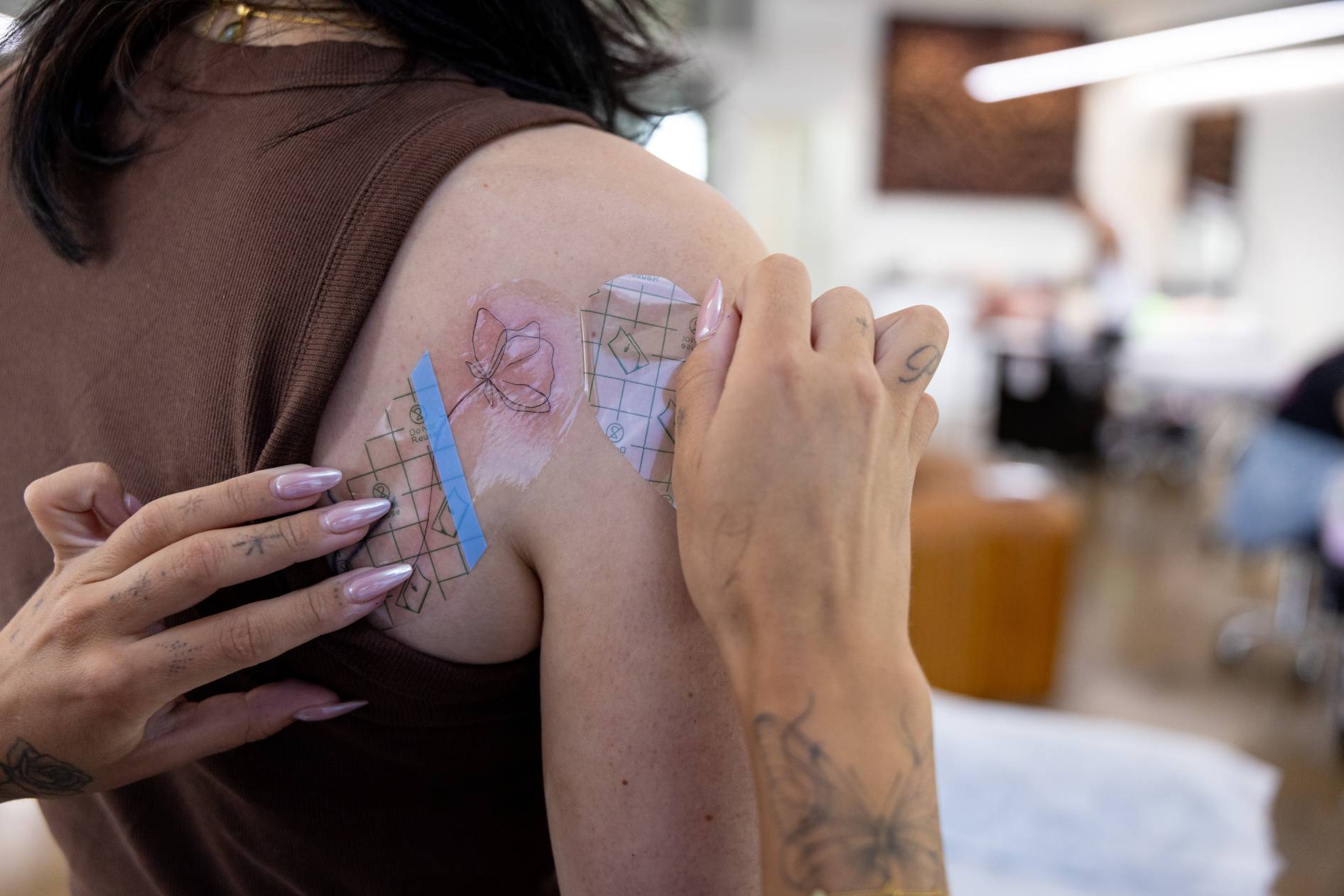
Initial barrier: Apply a clean barrier immediately after completing the session — either traditional cling film or a second-skin adhesive film. Second-skin products, which adhere directly to the tattooed area and create a sealed healing environment, have become the industry standard for fine line work in particular because they protect the thin ink deposit during the most vulnerable healing phase.
Cling film: Remove after 2–4 hours. Leaving cling film on overnight creates a warm, moist environment that can increase infection risk and affect healing quality.
Second-skin film: Can typically be worn for 3–5 days. Some plasma pooling under the film is normal. Advise clients that this is expected — it doesn’t indicate a problem. When removed, the area should be washed immediately and the standard aftercare routine begun.
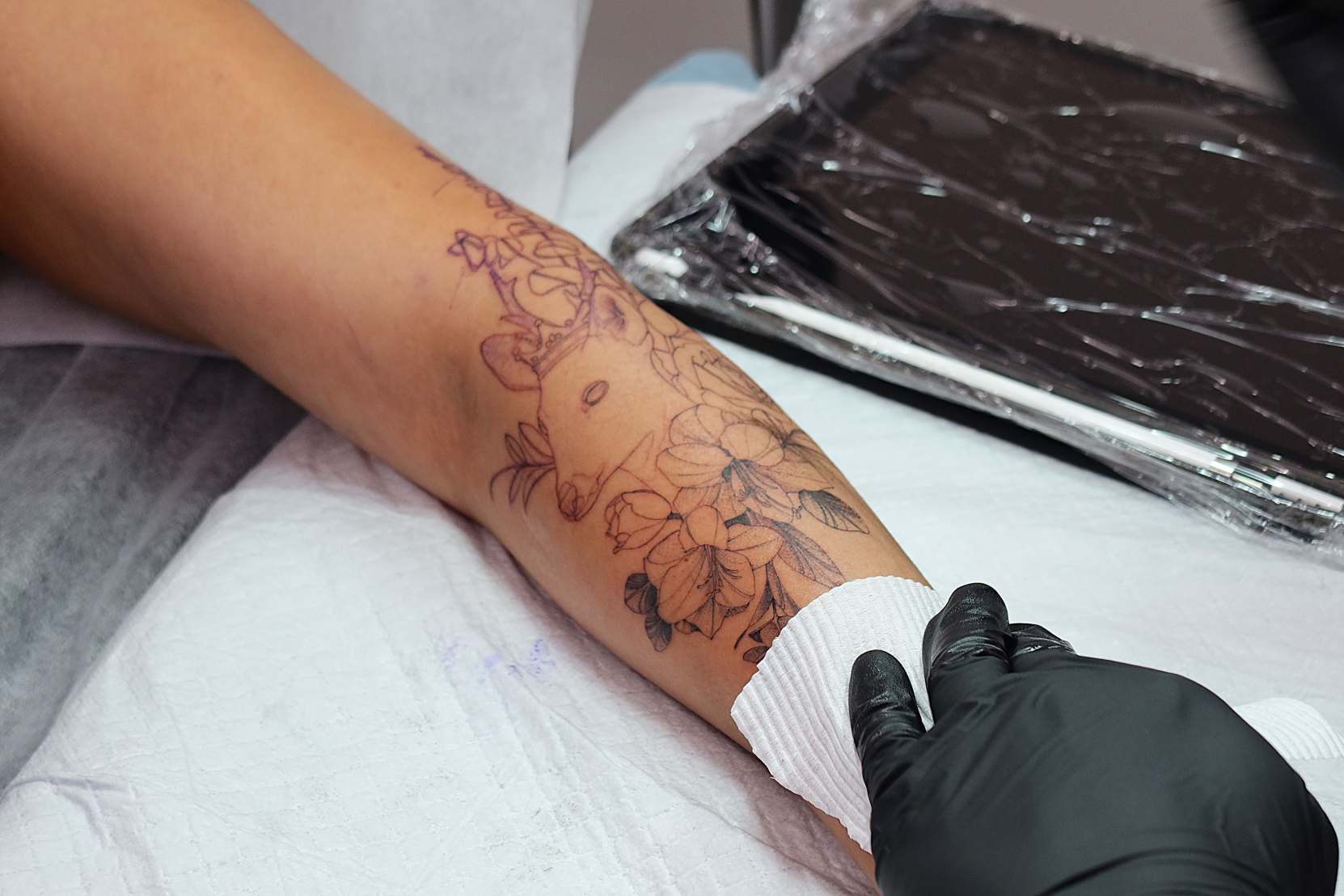
First wash: Lukewarm water, fragrance-free non-antibacterial soap, fingertips only (no cloth or sponge). Pat completely dry with clean paper towel — fabric towels carry bacteria and can snag healing skin. Begin moisturising immediately after.
The Core Aftercare Routine (Days 1–14)
The basic healing protocol:
• Wash 2–3 times daily with fragrance-free soap and lukewarm water • Pat dry thoroughly after each wash — do not rub • Apply a thin, even layer of aftercare product (tattoo balm, Bepanthen, or plain fragrance-free moisturiser) • Repeat morning and evening at minimum; more frequently if skin feels tight or dry • Thin layers of moisturiser applied regularly — not thick applications occasionally • Avoid petroleum-heavy products such as Vaseline on fresh tattoos
The emphasis on ‘thin layer’ matters particularly for fine line clients. Over-moisturisation can negatively affect ink retention in work with minimal ink deposit. The skin needs to breathe during healing — not be smothered.
What to Avoid During Healing
Non-compliance with the avoidance guidelines is the most common cause of poor healing outcomes. Be direct and clear:
Swimming and soaking: No pools, lakes, oceans, baths, or hot tubs for at least 2–4 weeks. Water immersion softens healing skin, disrupts the healing process, and significantly increases infection risk — particularly in public pools and natural water sources.
Sun exposure: Direct UV exposure on healing tattoos breaks down ink and impairs healing. Keep the area covered or protected from direct sun until fully healed. After healing, daily SPF on tattooed areas significantly extends the life and clarity of the work.
Heavy exercise and sweating: Intense exercise producing heavy sweat should be avoided for the first week. Sweat creates a moist, bacteria-harbouring environment that can affect healing and introduce infection risk.
Picking and scratching: The most damaging client behaviour during healing. When peeling begins — typically days 5–10 — it must happen naturally. Forced peeling removes ink from fine line work in particular. Communicate this firmly and include it in written aftercare.
Tight clothing: Fabric friction over a healing tattoo causes irritation and can affect ink retention. Advise loose, soft clothing over the healing area for the first 2 weeks.
Healing Milestones: Setting Expectations
Walk every client through the healing timeline so they’re not alarmed by normal phases:
• Days 1–3: Redness, swelling, possible plasma — all normal • Days 3–7: Peeling begins — allow it, never force it • Week 2: Cloudy or milky appearance — new skin forming over the ink • Weeks 3–4: Tattoo settles and clarity begins to return • 6–10 weeks: Fully healed result visible
Tell clients directly: ‘The tattoo will look different during healing than it did fresh, and different again once healed. If anything concerns you, send me a photo before you worry — this is part of the service.’
Written Aftercare Cards: A Simple Tool That Protects Your Work
Verbal instructions are forgotten by the time the client gets home. Written aftercare guidance — a printed card, a PDF email, or a text message — ensures clients have the information when they actually need it: at home, in the days after their session, when questions arise.
A simple written card covering: wash instructions, moisturising frequency, the avoidance list, and the healing timeline is enough. Keep it clear and easy to follow. Clients who have clear written guidance are less likely to make damaging decisions, which means better healed results and stronger portfolio photography.
The Canadian Centre for Occupational Health and Safety and provincial public health guidelines across Canada emphasise the practitioner’s responsibility to provide comprehensive post-procedure care instructions as part of safe skin penetration practice.
Our Fine Line Tattoo Course includes training on client communication and aftercare protocols — because professional practice extends well beyond the technical work of the session itself.
Explore our full training range at Omnia Tattoo Academy.