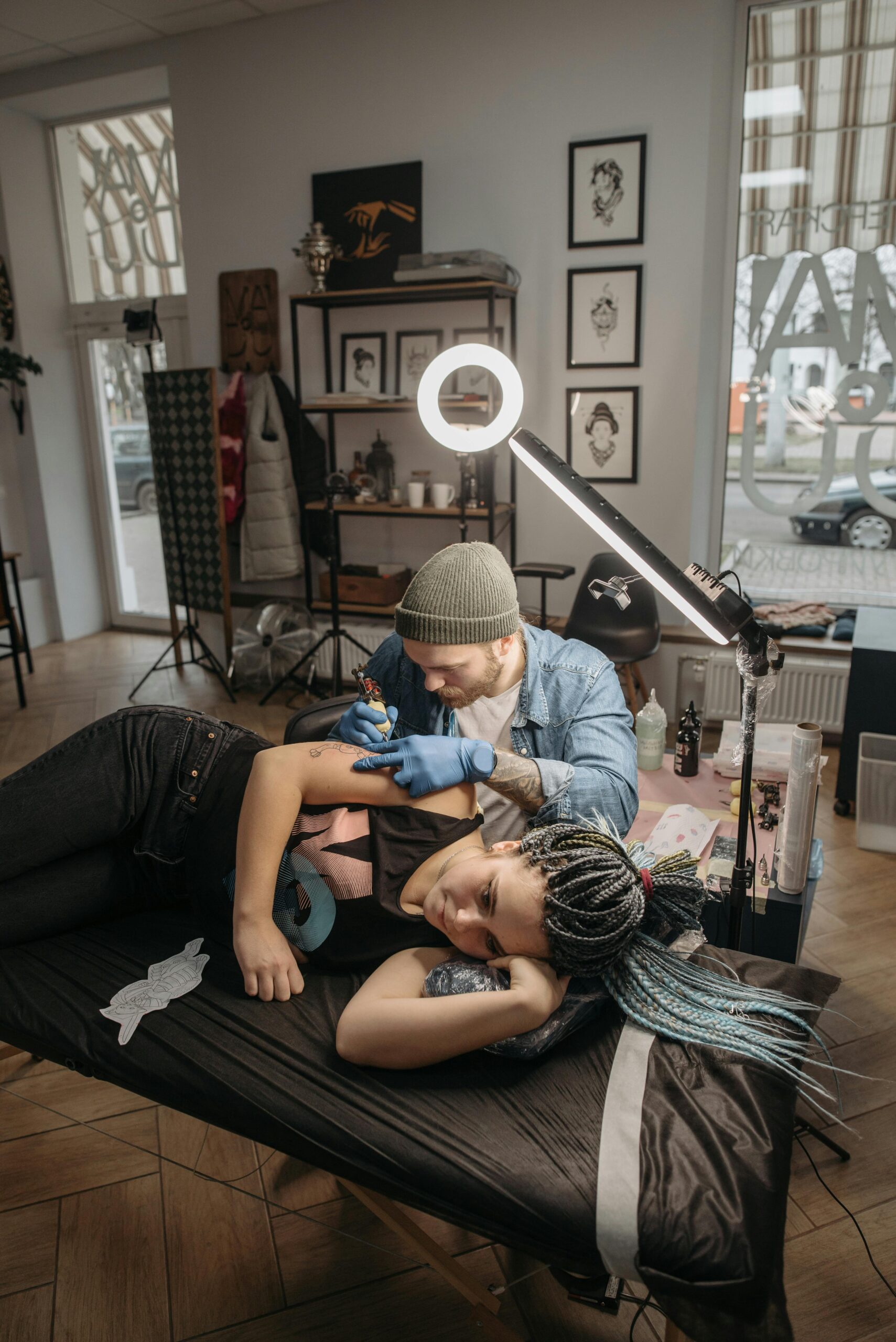
It’s a reasonable question. Tattooing is a physical skill — your hands on a machine, needles entering skin, technique refined through repetition. So when someone says you can learn it through an online course, scepticism is justified. Can you actually develop professional tattooing ability from home?
The short answer is yes — with important qualifications. Here’s an honest breakdown of what online tattoo training delivers, what it can’t replace, and how the best online programmes are designed to account for both.

What Sceptics Get Right — and Wrong
The scepticism about online tattoo training usually centres on one legitimate concern: you can’t practise on a client through a screen. That’s correct. No amount of video instruction replaces the physical feedback of needle meeting skin — the resistance, the depth sensation, the feel of the machine responding to skin texture and elasticity.
But this concern confuses two distinct learning processes: knowledge acquisition and physical practice. These are not the same thing, and they don’t need to happen in the same location.
Consider how surgeons learn their craft. They study anatomy, procedures, and protocols through lectures, videos, and textbooks — and then practise on simulators and cadavers before touching a living patient. No one argues that the academic component is valueless because it doesn’t happen in theatre.
Online tattoo courses work on the same principle. They deliver the knowledge framework and theoretical foundation that underpins good technique. Physical practice — on synthetic skin, and eventually on willing early clients — happens alongside the course, at home or in a local studio arrangement.
What Online Tattoo Courses Cover Well
A well-designed online tattoo course delivers exceptional instruction in:
Skin anatomy and ink behaviour: Understanding the epidermis, dermis, and hypodermis — and how ink deposits, migrates, and ages in each layer — is fundamental knowledge that translates directly to better technique. This is delivered exceptionally well through video and illustrated content.
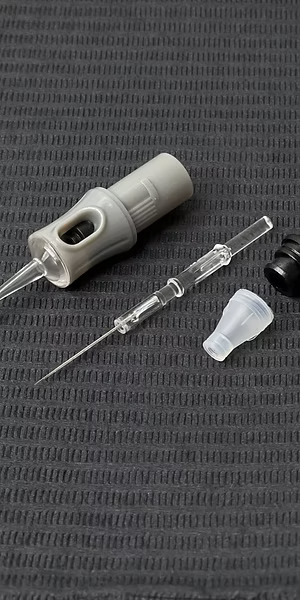
Machine setup and needle selection: Understanding the relationship between machine voltage, needle configuration, depth, and the resulting mark on skin is teachable through demonstration. Watching an experienced instructor troubleshoot machine settings teaches you what to look for and adjust in your own practice.
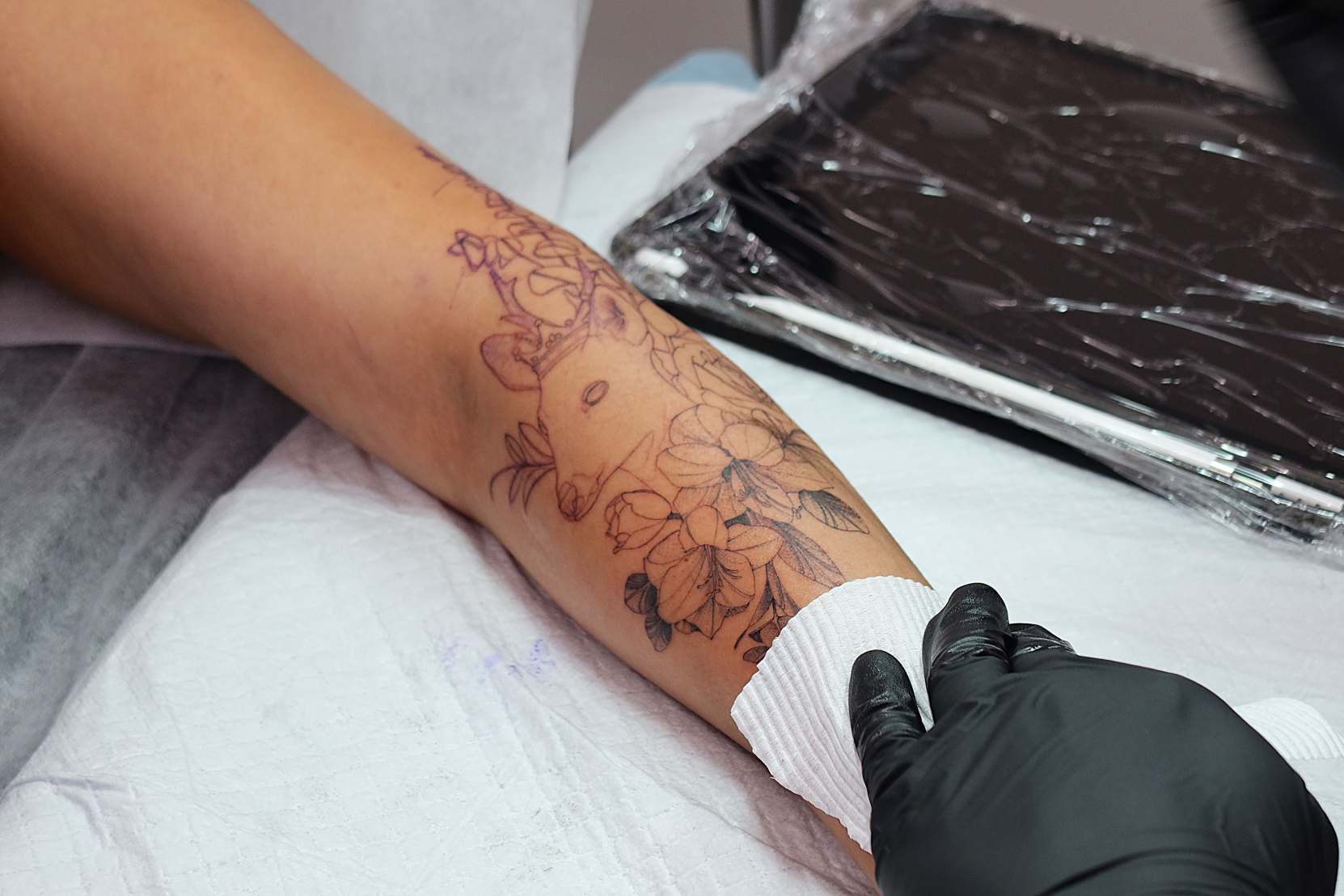
Design principles and stencil preparation: How to translate reference art into a workable stencil, accounting for body curves and skin tension, is entirely teachable online — it’s a visual and conceptual skill, not a kinetic one.
Safety, sterilisation, and infection control: Hygiene protocols, cross-contamination prevention, and infection control — mandatory knowledge for any practising artist in Canada — are a natural fit for online instruction. Clear video demonstration of correct procedures is often more thorough than what’s covered in informal apprenticeship settings.
Style technique and composition: Whether you’re studying fine line or realism, the principles of composition, shading, line weight, and tonal balance are conveyed effectively through detailed video breakdowns and annotated example work.
How Practice Fits Into Online Training
The best online tattoo courses don’t pretend the screen is a substitute for hands-on practice. Instead, they explicitly build practice into the curriculum.
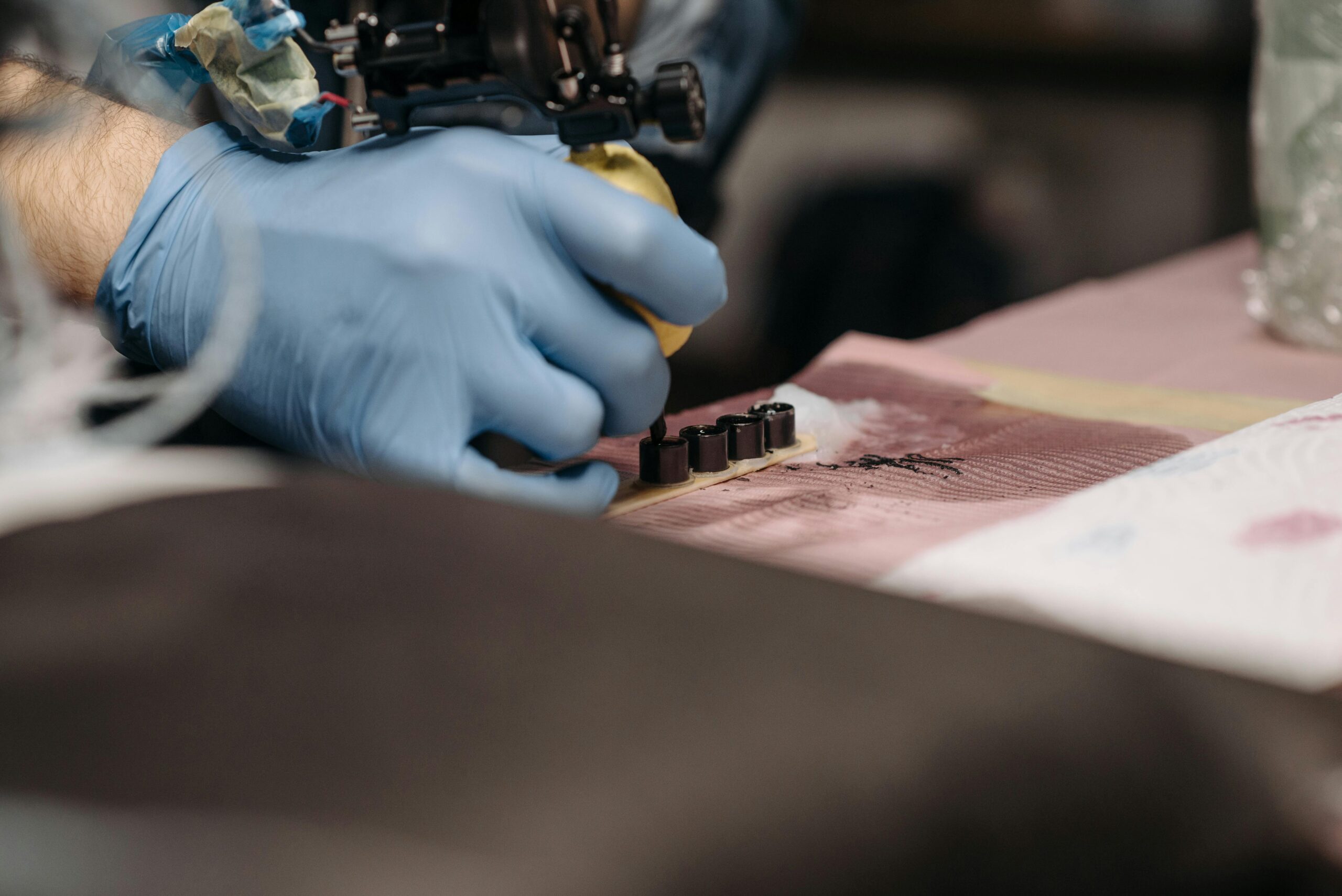
Students receive practice skin — synthetic pads that replicate real skin resistance and texture — as part of their course kit. They complete assigned practical exercises, photograph their results, and submit them to instructors for feedback. This creates a structured feedback loop: you practise, an expert reviews your work, you adjust and practise again.
This model can actually be more systematic than a traditional apprenticeship, where feedback depends entirely on the mentor’s availability and teaching style. With structured online training, every student receives expert eyes on their practice work — not just when a senior artist happens to observe them.
The Canadian Centre for Occupational Health and Safety outlines infection control requirements for personal service workers including tattoo practitioners — knowledge that is fully covered in comprehensive online tattoo curricula.
What You Need to Supply: Commitment and Self-Direction
The honest caveat about online tattoo training is that it requires more self-direction than a classroom or studio environment. You manage your own study schedule, create your own practice time, and push through the early stages of learning a physical skill without someone standing beside you.
For people with existing commitments — full-time work, family responsibilities, other study — this is actually an advantage. Online courses flex around your life in ways that an in-studio programme or formal apprenticeship cannot. But it does require discipline and intentional habit-building.
The students who get the most from online tattoo training are those who treat it like a professional commitment: scheduled practice blocks in their calendar, timely assignment submissions, and active engagement with their tutor when questions arise.
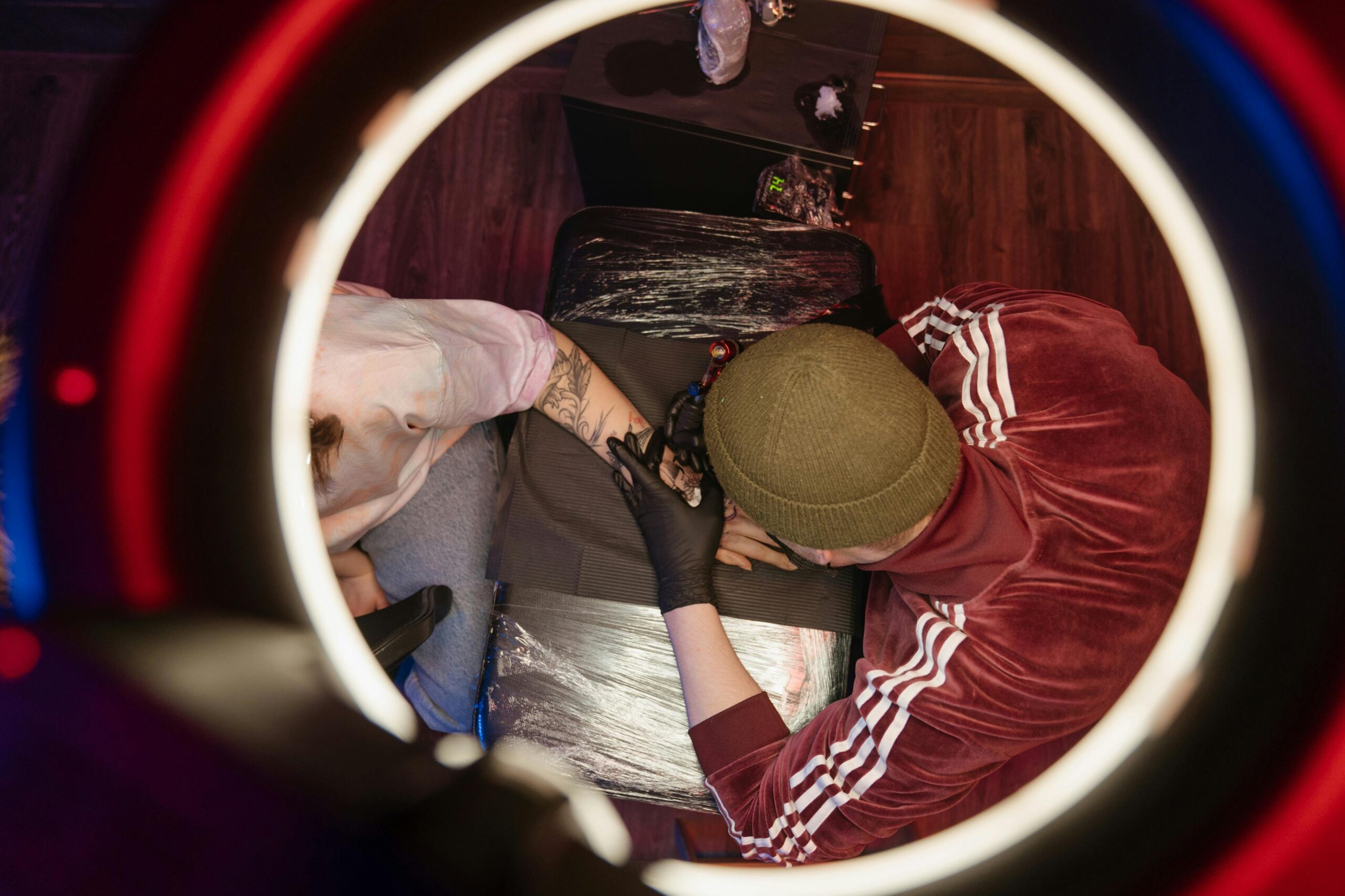
The Evidence: What Happens After Graduation?
The proof of any training model is graduate outcomes. Online tattoo course graduates are working professionally across Canada — running home studios in British Columbia, booth-renting in Toronto studios, building social media followings that generate consistent inbound enquiry. Many secure their first paying client within 60–90 days of completing their practical assessments.
Our Fine Line Tattoo Course and Black and Grey Realism Masterclass are both structured around this model — knowledge delivered online, practice guided by expert tutor feedback, outcomes tracked through a structured assessment process that mirrors professional standards.
Is Online Tattoo Training Right for You?
If your goal is to become a professional tattoo artist and you’re considering whether online training is a legitimate pathway — the answer is yes, provided you choose a course with experienced instructors, a structured practical feedback system, comprehensive curriculum coverage, and genuine ongoing student support.
Online training isn’t the easy option. It’s a flexible, well-structured pathway that, done seriously, produces industry-ready artists. The question isn’t whether online learning works — it’s whether you’re prepared to put the work in.
Explore our courses and their structure at Omnia Tattoo Academy.
For information on provincial infection control requirements for tattoo practitioners in Canada, refer to your provincial health authority — for example, Public Health Ontario or BC Centre for Disease Control.